
Coral propagation is the process of growing new coral colonies from existing ones. You can create new corals through fragmentation (cutting pieces from a healthy colony) or by collecting and raising coral spawn in controlled conditions. Aquarium hobbyists use propagation to expand their reefs without harvesting from wild populations. Restoration projects rely on these same techniques to rebuild damaged ocean reefs.
This guide breaks down everything you need to know about coral propagation. You’ll learn why this practice matters for both home aquariums and ocean conservation. We’ll walk through the practical steps to start propagating corals at home, from choosing the right equipment to preparing your first frags. You’ll discover the main methods professionals and hobbyists use, including asexual fragging and sexual spawning techniques. We’ll cover essential care tips that help your coral frags thrive and grow into healthy colonies. Finally, you’ll understand the ethical considerations and best practices that ensure responsible propagation. Whether you’re building your first reef tank or expanding an established aquarium, this article gives you the foundation to propagate corals successfully.
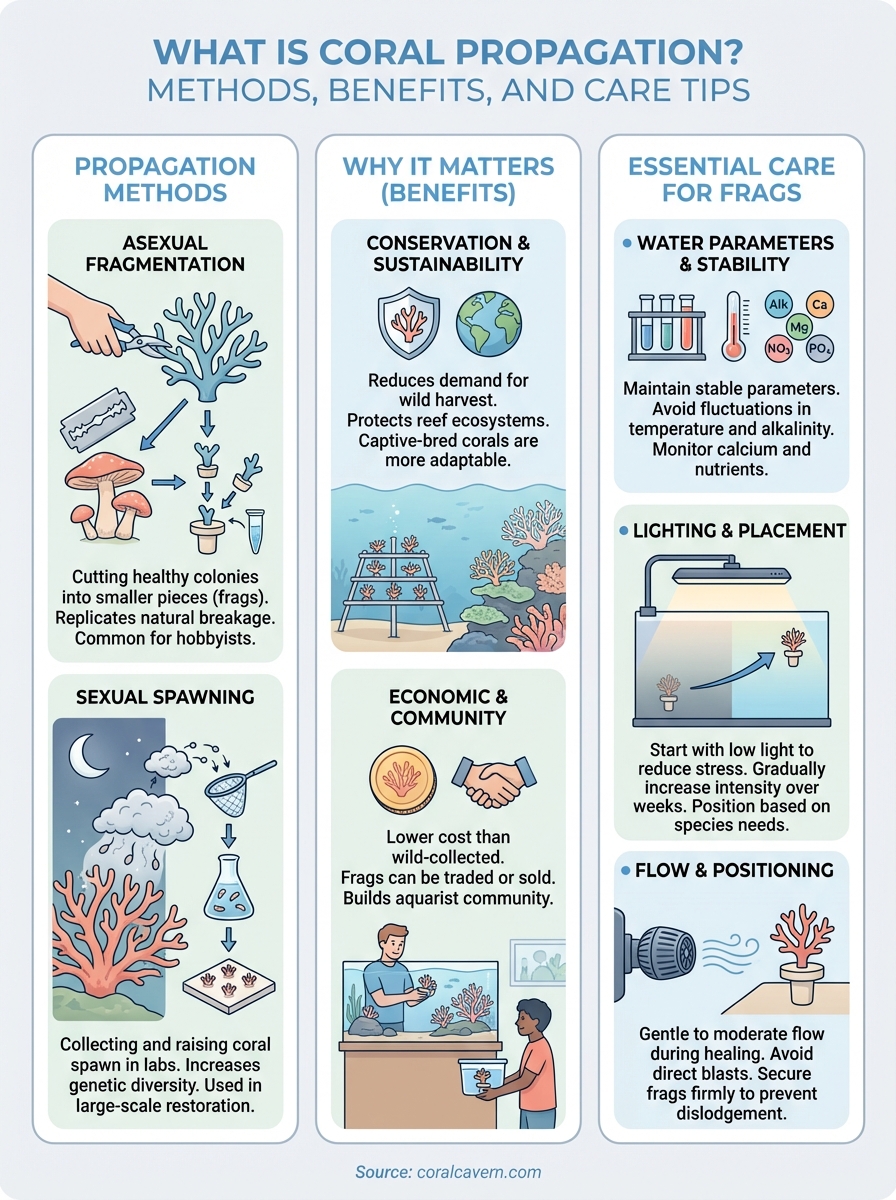
Coral reefs face unprecedented threats from climate change, pollution, and habitat destruction. Wild coral populations have declined by more than 50% in many regions over the past few decades. When you propagate corals in your aquarium or through restoration programs, you reduce the demand for wild-collected specimens. This simple practice directly protects fragile reef ecosystems while giving you access to beautiful corals for your tank.
Aquarium propagation creates a sustainable supply chain that benefits both hobbyists and ocean reefs. Captive-bred corals adapt better to aquarium conditions than wild-caught specimens, which means they grow faster and survive longer in your system. You’ll spend less time troubleshooting problems and more time enjoying a thriving reef. Restoration projects use the same propagation techniques to rebuild damaged reefs, planting thousands of coral fragments to restore habitat for marine life. Scientists working on reef restoration have successfully grown coral nurseries that produce enough frags to cover football-field-sized areas of degraded reefs.
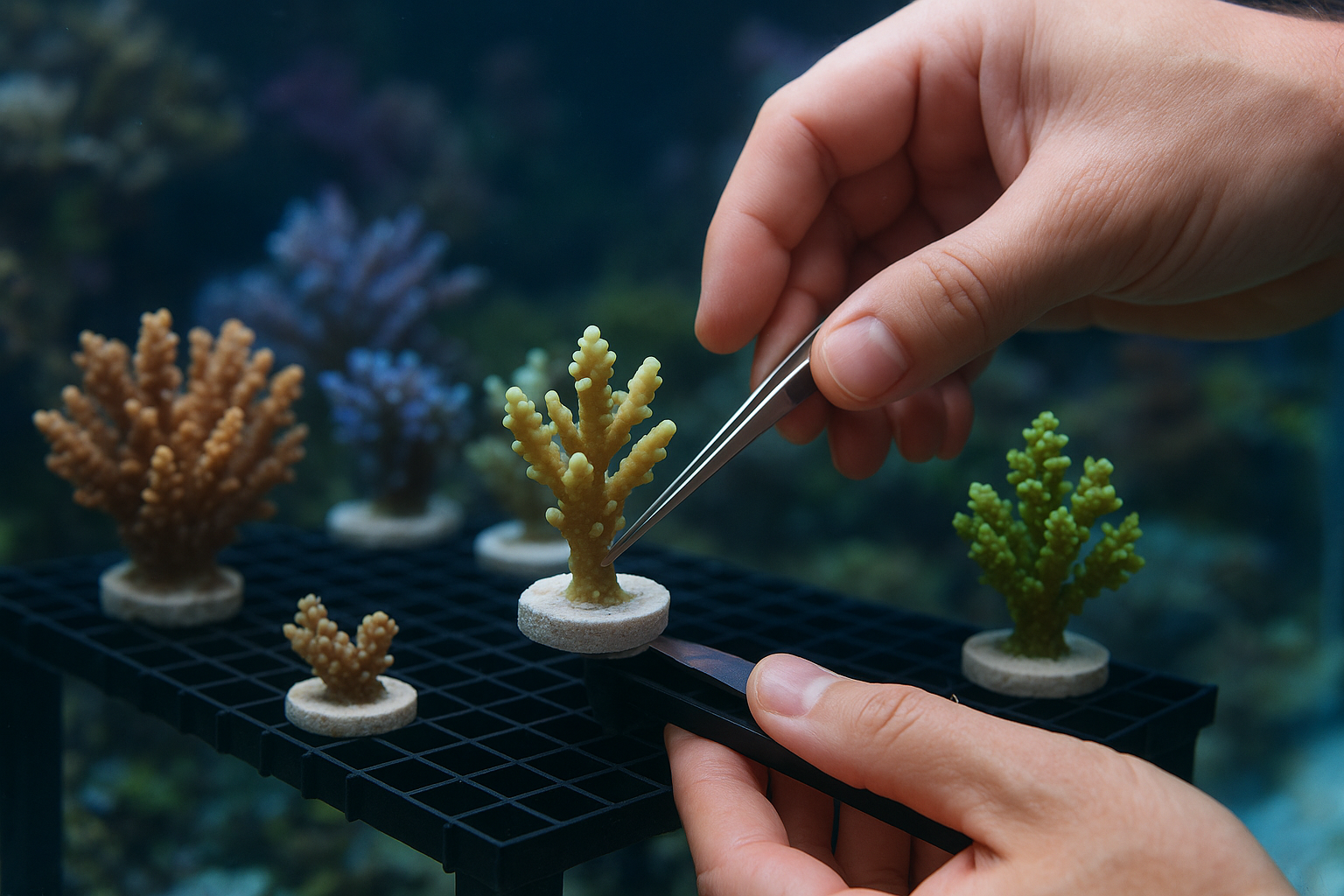
Understanding what is coral propagation helps you contribute to conservation efforts while building a successful home aquarium.
Propagated corals cost significantly less than wild-collected specimens. A single healthy colony in your tank can produce dozens of frags over time, turning one purchase into multiple corals. You can trade or sell these frags to other aquarists, which builds connections within the hobby and offsets your equipment costs. Local reef clubs and online communities thrive on this exchange system, making the hobby more accessible to newcomers who might otherwise struggle with high startup costs. The practice strengthens the entire aquarium community while ensuring everyone has access to healthy, sustainable coral specimens.
Starting coral propagation in your home aquarium requires basic planning and the right equipment. You don’t need a dedicated propagation tank to begin, though many aquarists eventually set one up as their skills develop. Your existing reef tank can serve as your propagation space when you’re getting started. The key is understanding what you need before making your first cut and preparing your system to support new coral growth.
You need sharp, clean cutting tools designed specifically for coral work. Bone cutters work well for hard corals with thick skeletons, while razor blades or scalpels handle soft corals and thin-branching species. Coral frag plugs provide stable bases for your cut pieces to attach and grow. These small ceramic or concrete discs come in various sizes to match different coral types. You’ll also need reef-safe adhesive gel or two-part epoxy to secure frags to plugs. Standard cyanoacrylate gel (super glue gel) works perfectly and bonds instantly underwater.
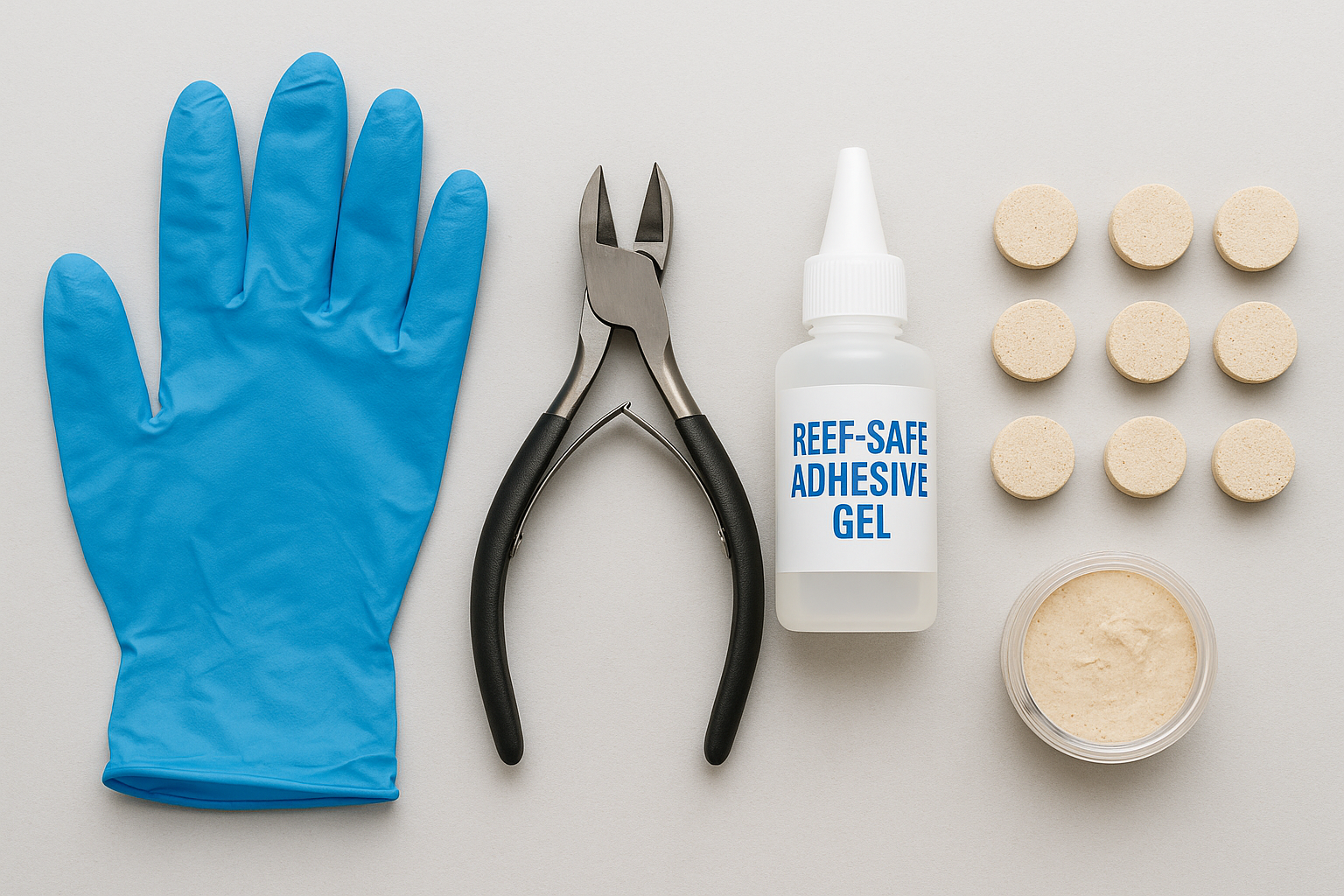
Protective equipment matters more than most beginners realize. Nitrile gloves protect your hands from coral toxins and prevent you from transferring oils or contaminants to your corals. Safety glasses shield your eyes from accidental splashes of coral tissue or zoanthid toxins. A dedicated cutting area outside your tank makes the process cleaner and gives you better control. Set up a shallow tray filled with tank water where you can work comfortably without contaminating your display tank.
Soft corals and beginner-friendly species give you the best success rates when learning what is coral propagation. Mushroom corals, zoanthids, and Kenya tree corals grow quickly and tolerate the stress of fragging better than delicate species. These corals recover from cuts within days and show visible growth within weeks. Avoid rare or expensive specimens until you’ve mastered the basic techniques. Practice on hardy, fast-growing corals that can handle mistakes without dying.
Selecting resilient coral species for your first propagation attempts builds your confidence and develops the skills you need for more challenging corals later.
Parent colony health determines your frag success more than any other factor. Choose corals with bright coloration, fully extended polyps, and strong tissue coverage across their entire structure. Stressed or bleached corals rarely survive the additional trauma of cutting. Fast-growing sections from healthy colonies produce the most vigorous frags. Look for areas showing active growth, new tissue formation, or recent branching as your primary cutting targets.
You can propagate directly in your display tank or create a separate grow-out area. Display tank propagation saves equipment costs but risks stressing your established corals during the cutting process. A dedicated frag tank gives you precise control over lighting, flow, and parameters while protecting your main system. Even a small 10-gallon tank with basic filtration serves as an effective propagation space. Position frag plugs in areas with moderate water flow and appropriate lighting for your coral species. Too much flow dislodges newly attached frags, while insufficient movement allows debris to settle on healing tissue.
Two primary approaches dominate coral propagation work across both restoration projects and home aquariums. Asexual fragmentation involves cutting or breaking healthy coral colonies into smaller pieces that grow into independent clones. Sexual propagation captures coral spawn during natural breeding events and raises the resulting larvae in controlled conditions. Understanding what is coral propagation means recognizing how these complementary methods serve different purposes and suit different situations. Asexual techniques give you immediate results and predictable outcomes, while sexual methods increase genetic diversity and adapt corals to changing conditions.
Fragmentation replicates the natural process that occurs when storms break coral branches or when colonies grow over each other and split apart. You create new coral colonies by removing a section from a healthy parent and attaching it to a new substrate. Soft corals like mushrooms and leather corals tolerate rough handling and regrow quickly from even small pieces. You can cut these species with a sharp blade, and the tissue heals within days. Hard corals require more precision since you must cut through their calcium carbonate skeleton without crushing or cracking the structure.
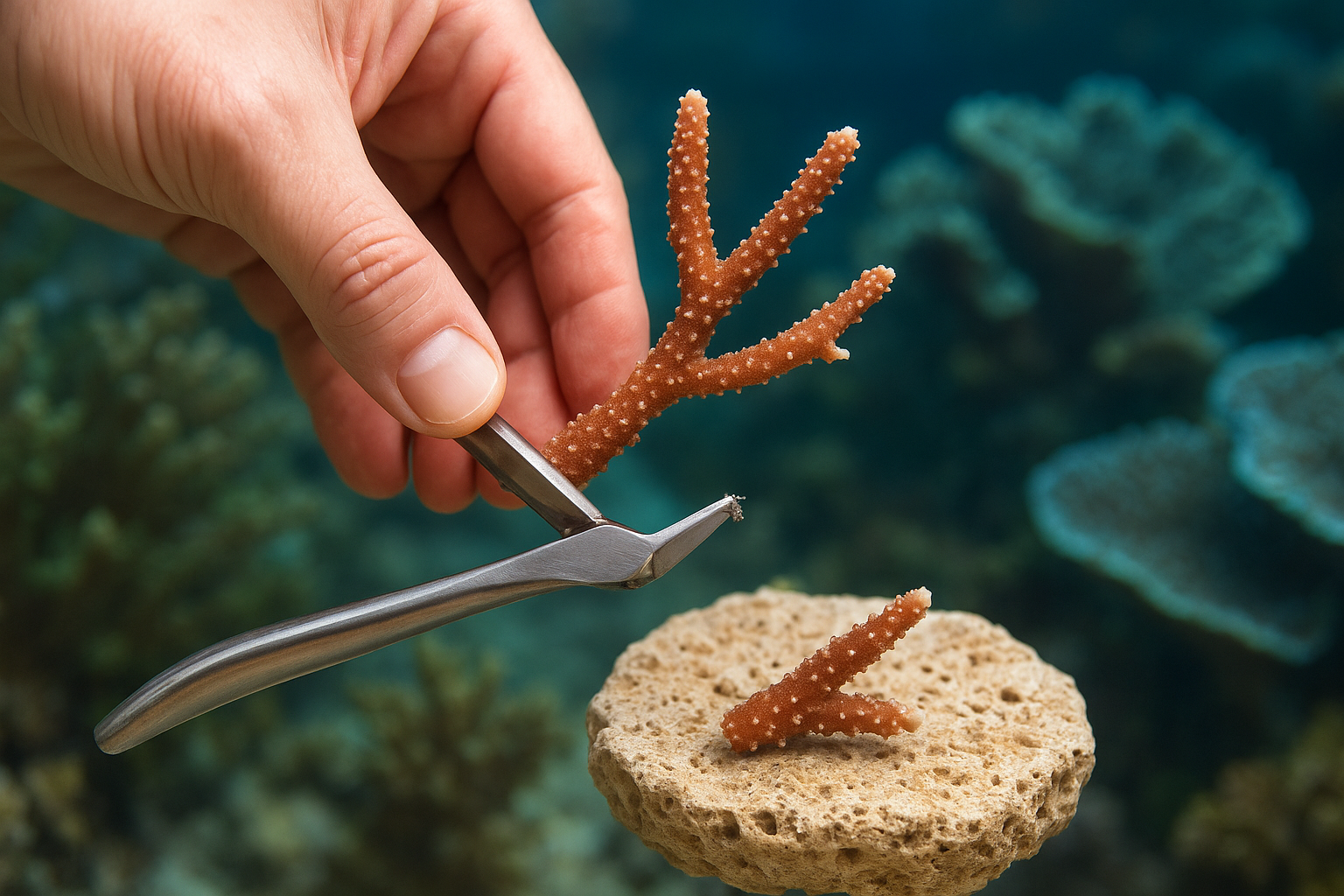
Each coral type demands specific cutting approaches. Branching corals like Acropora and Montipora produce the easiest frags because you simply clip off a branch tip with bone cutters. The parent colony barely notices the loss, and your frag starts growing immediately. Encrusting corals require you to chisel or pry sections away from their base rock, which creates more stress but still produces viable frags. Massive corals like brain corals present the biggest challenge since cutting through their thick skeleton takes significant force and generates coral dust that can irritate surrounding tissue.
Asexual propagation creates genetic copies of the parent coral, which means your frags will display identical colors, growth patterns, and care requirements.
Sexual propagation captures the annual coral spawning event when colonies simultaneously release eggs and sperm into the water. Scientists and advanced aquarists collect this spawn and fertilize eggs in laboratory conditions. The resulting larvae settle on prepared substrates and develop into new coral polyps with unique genetic combinations. Wild restoration programs rely heavily on this method because sexually produced corals show greater resilience to environmental stress compared to clones from fragmentation.
Home aquarists rarely attempt sexual propagation because timing and conditions must align perfectly. Spawning occurs only once or twice yearly for most species, usually triggered by specific moon phases and water temperatures. You need separate broodstock tanks to maintain colonies in optimal reproductive condition. Collection equipment must capture spawn immediately after release, and you must maintain precise water quality while larvae develop over several weeks. The process demands constant monitoring and produces variable results, though successful spawns yield hundreds or thousands of new corals from a single event.
Your newly cut coral frags need specialized care during their first few weeks as they heal and establish new growth. Fresh frags lack the resilience of mature colonies because cutting disrupts their tissue and exposes internal structures to potential infection. Successful propagation depends on maintaining optimal conditions while your frags recover from the stress of cutting and reattachment. The care requirements differ from maintaining established corals because healing tissue demands more stable parameters and closer monitoring than healthy colonies.
Stability matters more than perfection when caring for healing coral frags. Your water parameters should remain constant rather than bouncing between target ranges. Alkalinity shifts of more than 0.5 dKH per day can prevent proper tissue regeneration and skeleton formation. Temperature fluctuations stress healing frags even more than established corals, so maintain your system within 1-2 degrees of your target temperature. Test your parameters daily during the first week after fragging to catch any drift before it impacts your frags.
Calcium levels between 400-450 ppm support skeleton formation in stony coral frags. Your alkalinity should stay between 8-11 dKH depending on your system’s natural balance. Magnesium levels near 1300-1400 ppm help maintain calcium and alkalinity stability while supporting coral calcification. Nitrates and phosphates need regular monitoring because healing corals struggle in both nutrient-depleted and nutrient-rich conditions. Target nitrates around 5-10 ppm and phosphates near 0.03-0.08 ppm for optimal frag growth.
Consistent water parameters accelerate healing and encourage faster tissue regeneration compared to systems with frequent parameter swings.
Light intensity determines how quickly your coral frags recover and begin growing. Newly cut frags benefit from reduced lighting compared to the parent colony’s position because damaged tissue photosynthesizes less efficiently than healthy coral. Place your frags in the lower light areas of your tank for the first 3-5 days after cutting. This reduces stress on compromised zooxanthellae populations while tissue repairs itself. Gradually move frags toward their target light levels over 1-2 weeks by raising them a few inches every few days.
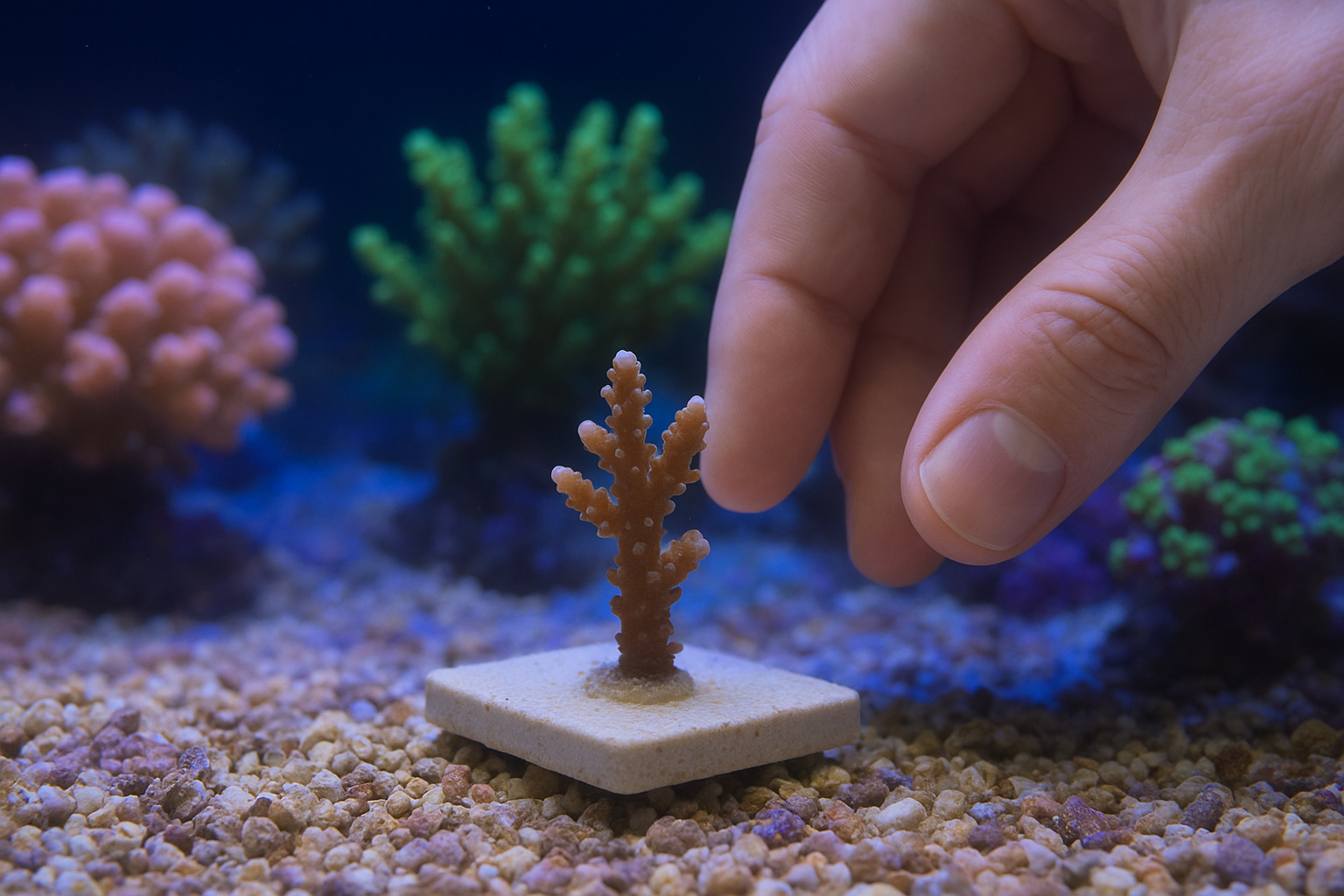
Different coral types require specific light placement to thrive after propagation. Soft corals and LPS species tolerate moderate lighting in the 100-200 PAR range once healed. SPS corals demand higher intensity between 200-400 PAR after their initial recovery period. You can measure these levels with a PAR meter or estimate based on distance from your lights. Understanding what is coral propagation includes recognizing that frags need time to adapt to new light conditions even when they come from your own tank.
Water movement keeps your frags clean and delivers nutrients while removing waste products. Gentle to moderate flow works best during the healing phase because strong currents can dislodge frags before they attach securely to their plugs. Position your frags where they receive indirect flow rather than direct blasts from powerheads or return pumps. The water should gently move the coral’s polyps without bending or whipping the tissue violently.
Proper frag orientation affects long-term growth patterns and health. Branching corals grow best when positioned upright to match their natural growth direction. Encrusting species can attach at any angle but spread faster on horizontal surfaces. Check your frags daily during the first week to ensure they haven’t fallen or shifted position. Reposition any dislodged frags immediately because prolonged contact with sand or rock can damage healing tissue and introduce harmful bacteria.
Coral propagation carries responsibilities that extend beyond your aquarium glass. You handle living organisms that contain toxins, require specific care, and connect to broader conservation efforts. Understanding what is coral propagation includes recognizing the potential risks to both your corals and yourself, along with the ethical considerations that separate responsible practices from harmful ones. Following established best practices protects your health, ensures your corals thrive, and supports sustainable growth in the hobby.
Several coral species release toxic compounds that pose health hazards during cutting and handling. Zoanthids and palythoas produce palytoxin, which causes severe reactions if it enters your bloodstream through cuts or contacts your eyes. Wear nitrile gloves and safety glasses every time you propagate these species, and wash your hands thoroughly afterward. Never propagate corals if you have open wounds or cuts on your hands, because toxins enter your system much faster through broken skin.
Coral frags face infection risks after cutting that can spread throughout your entire tank. Sterilize all tools between cuts using alcohol or flame sterilization to prevent transferring bacteria or parasites between colonies. Quarantine new frags for at least two weeks before introducing them to your display tank, which gives you time to spot infections, pests, or diseases before they contaminate your established corals.
Proper safety equipment and sterilization procedures prevent the majority of propagation-related health issues and coral losses.
You should only propagate legally obtained corals from your own collection or trusted sources. Never collect corals from wild reefs without proper permits, and avoid purchasing specimens of questionable origin. Sharing or selling frags within the hobby reduces demand for wild collection and builds community connections, but you must ensure recipients understand the care requirements for species you distribute. Label your frags accurately with species names and care information to help other aquarists succeed with propagated corals.
You now understand what coral propagation means and how it benefits both your aquarium and ocean conservation efforts. Successful propagation starts with choosing hardy corals, using proper equipment, and maintaining stable water parameters during the healing phase. Each frag you create reduces demand on wild reefs while expanding your collection sustainably. The techniques you’ve learned apply whether you’re growing a single mushroom coral or building an entire reef system.
Start with simple fragmentation techniques on resilient soft corals before attempting more challenging species. Monitor your frags closely during their first two weeks, adjust lighting and flow as needed, and maintain consistent water chemistry throughout the recovery period. Follow safety protocols when handling toxic species, and share your success with the aquarium community through responsible frag trading.
Ready to build your reef with sustainable, quality corals? Explore our selection of propagation-ready specimens and start growing your collection today.