
Starting a reef tank feels exciting until you realize how many corals can die from small mistakes. Water chemistry shifts. Lighting gets too intense. Flow patterns stress delicate polyps. Your first coral purchase becomes an expensive learning moment.
Soft corals change this equation. These hardy species tolerate beginner errors that would kill their stony cousins. They grow fast enough to show you quick results. They forgive imperfect water parameters. Most importantly, they help you build confidence before moving to more demanding species.
This guide breaks down eight soft corals that actually survive in new tanks. You will learn exactly what each coral needs for lighting and flow. You will see where to place them and how fast they grow. You will know what to look for when buying and which compatibility issues to avoid. Start with these corals and you will create a thriving reef instead of an expensive graveyard.
A curated soft coral bundle removes the guesswork from your first purchase. Instead of researching individual species and hoping they work together, you get pre-selected corals that share similar care requirements and coexist peacefully in the same tank. This approach cuts your learning curve in half.
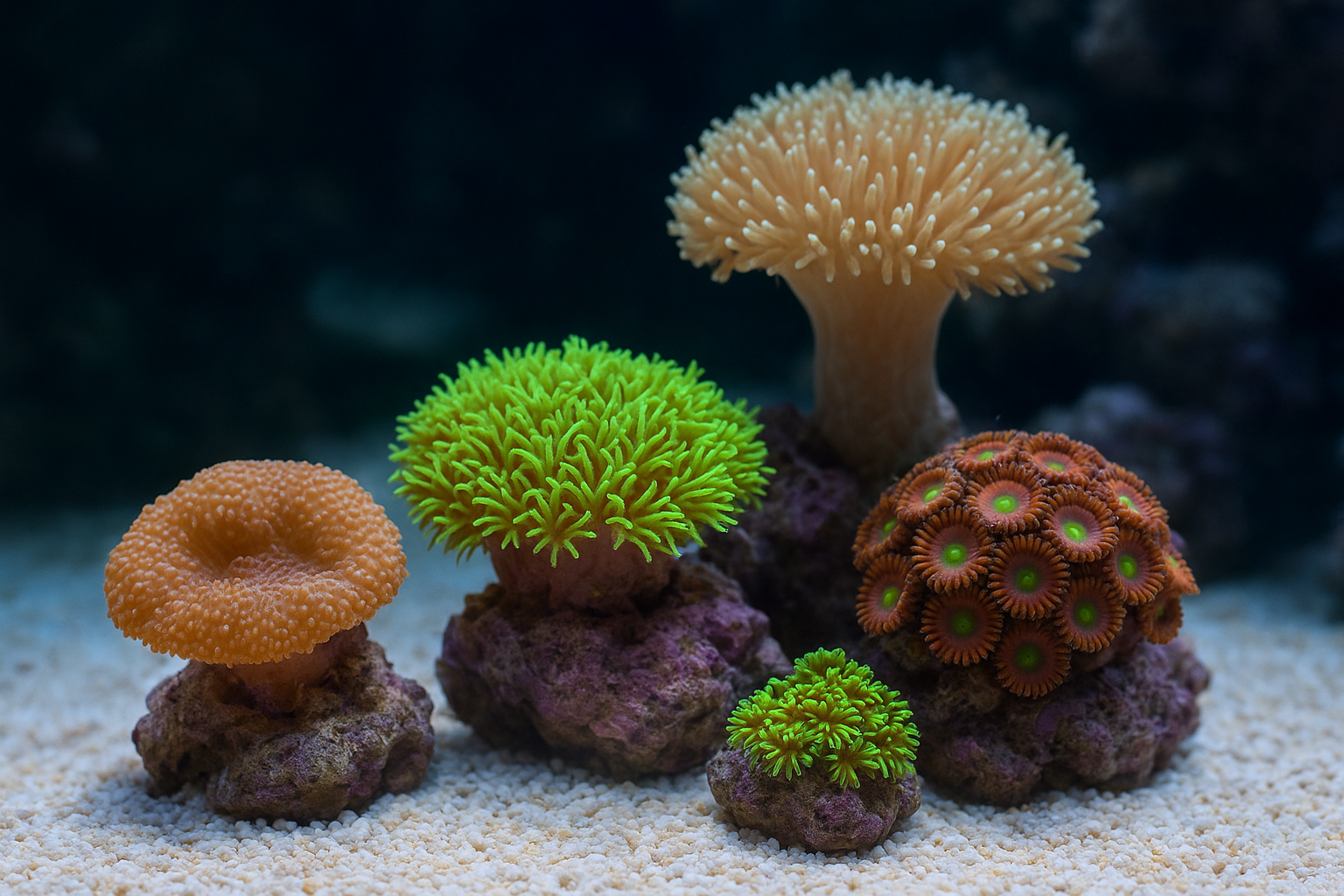
The Coral Cavern starter bundle combines three to five hardy soft coral species in a single package. Each bundle includes varieties like mushroom corals, zoanthids, and green star polyps that tolerate beginner mistakes. You receive properly sized frags that establish quickly without overwhelming your new tank ecosystem. The selection focuses on growth speed and visual impact, giving you a colorful reef in weeks instead of months.
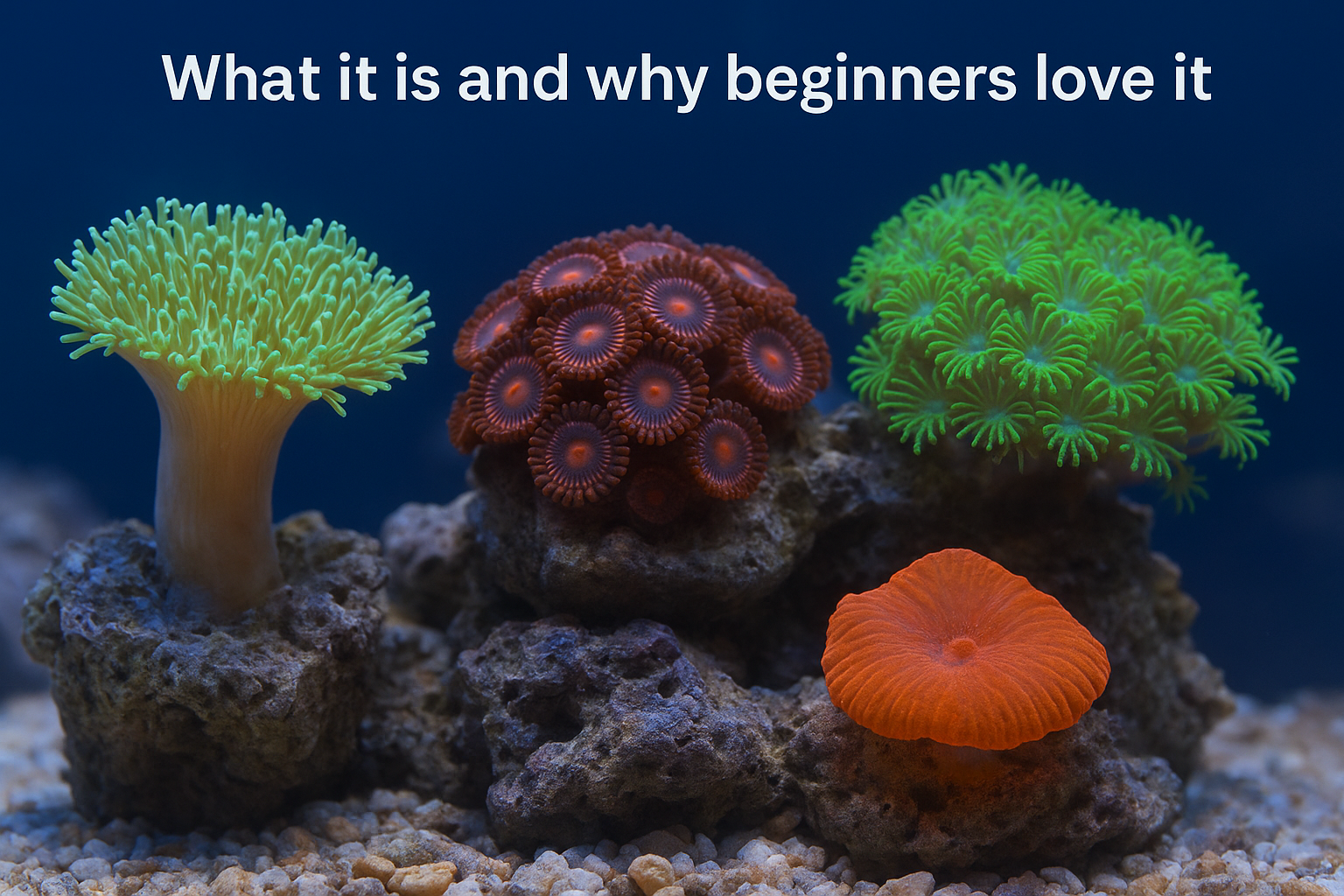
These bundles thrive under moderate LED lighting between 50 and 150 PAR at the placement level. You can use standard reef spectrum lights without expensive adjustments. Water flow should create gentle to moderate movement that keeps polyps swaying without causing them to retract. Maintain temperature between 76 and 82 degrees Fahrenheit, salinity at 1.025 specific gravity, and keep alkalinity stable around 8 to 10 dKH.
Starter bundles work because every coral shares the same ideal conditions, making tank management straightforward for new reefers.
Position your bundle pieces on separate rock islands in the lower to middle tank sections. This placement prevents faster growers from smothering slower species. Space each frag at least two inches apart to accommodate lateral growth. The selected corals avoid chemical warfare and sweeper tentacles, eliminating compatibility concerns that plague mixed reef tanks.
Examine each piece for fully extended polyps and vibrant color before accepting delivery. Healthy soft corals should not show tissue recession or bare spots. Request photos of the actual bundle being shipped rather than stock images. Verify that the seller includes acclimation instructions specific to your bundle composition and guarantees live arrival with proper packaging.
Mushroom corals earn their spot among the best beginner soft corals because they survive conditions that would kill most other species. These flat, disc-shaped organisms attach firmly to rock surfaces and expand into colorful carpets that add instant visual appeal. You will find them sold as discosoma, ricordea, or simply "shrooms" in reef shops.
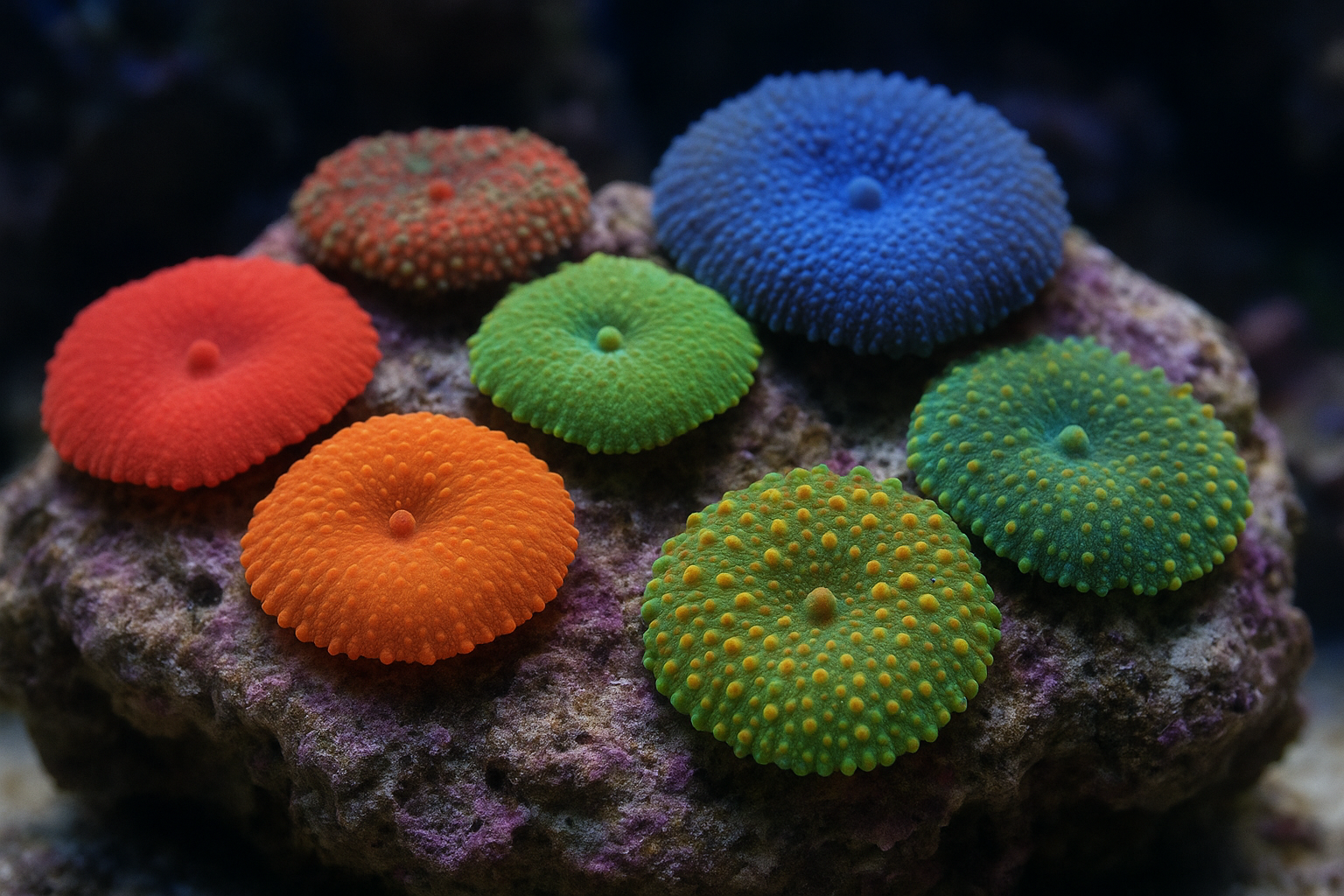
These corals resemble underwater mushrooms with a flat cap and short stalk structure. They come in hundreds of color variations ranging from solid reds and greens to wild patterns with spots, stripes, and metallic sheens. Beginners appreciate how mushrooms tolerate water chemistry swings and lighting changes without dying. They also reproduce by splitting naturally, giving you free frags without intervention.
Mushroom corals thrive in low to moderate lighting between 30 and 100 PAR. Higher intensity makes them shrivel while lower levels cause them to stretch upward. Keep water flow gentle to moderate as strong current tears their delicate tissue. They adapt to temperatures from 74 to 82 degrees and handle alkalinity fluctuations better than most corals. Salinity should stay near 1.025 specific gravity for optimal health.
Mushrooms signal their lighting preference by staying flat under proper intensity and stretching tall when they need more light.
Place mushrooms on rock surfaces or frag plugs in the lower third of your tank. They spread laterally by walking across rock and dropping pieces that form new colonies. Space them three inches from other corals to prevent smothering slower growers. Most mushrooms remain peaceful, though they can overgrow small zoas if left unchecked.
Select specimens with fully open caps and vibrant color throughout the tissue. Avoid any mushrooms showing white spots, tears, or detached bases. Ricordea varieties cost more but offer stronger colors and hardiness than standard discosoma types. Ask sellers about recent feeding and lighting conditions to match your home setup.
Green star polyps rank among the best beginner soft corals because they grow like weeds and forgive almost every mistake. These bright green polyps cover surfaces in mat-like sheets that wave hypnotically with your tank’s current. You will see them labeled as GSP in most reef shops and online stores.
This coral grows as individual polyps connected by a purple mat that spreads across rock surfaces. Each polyp extends a star-shaped crown of tentacles that stays open during the day and retracts at night. Beginners appreciate how GSP tolerates wide ranges in lighting, flow, and water chemistry without dying back. The coral also grows fast enough to show visible progress within weeks of placement.
GSP thrives under moderate to high lighting between 100 and 200 PAR but survives lower levels without issue. Water flow should create moderate to strong movement that keeps the polyps swaying and prevents debris accumulation. Maintain temperature between 76 and 82 degrees Fahrenheit with salinity at 1.025 specific gravity. These corals handle alkalinity swings better than most species, though stable conditions accelerate growth.
Green star polyps signal stress by staying retracted, but they recover quickly once conditions improve.
Place GSP on isolated rock islands or the back wall where it cannot spread to other corals. This coral grows extremely fast and will overtake neighboring species if given direct contact. Position pieces in the middle to upper sections of your tank for best polyp extension. Leave at least four inches between GSP and other corals to prevent accidental overgrowth.
Select frags with fully extended polyps showing bright green color without brown tinting. Check that the purple mat appears thick and healthy without bare patches or tissue recession. Avoid pieces that stay retracted during inspection as this indicates stress or disease. Purchase smaller frags because GSP multiplies rapidly and will fill available space within months.
Pulsing xenia creates mesmerizing movement in your tank through its unique rhythmic opening and closing behavior. These soft corals pump their polyps independently of water flow, adding a living pulse that draws your eye across the aquarium. You will find them sold as pulsing xenia, silver xenia, or waving hand polyps depending on their specific variety.
This coral grows as clusters of hand-shaped polyps that continuously open and close in a pulsing motion. Each polyp consists of a stalk topped with eight feathery tentacles that pulse independently throughout the day. Beginners appreciate how xenia tolerates poor water quality and grows fast enough to fill empty rock surfaces within weeks. The pulsing behavior provides entertainment that static corals cannot match.
Pulsing xenia thrives under low to moderate lighting between 50 and 150 PAR but adapts to higher intensity without damage. Water flow should stay gentle to moderate as strong current disrupts the pulsing motion and stresses the coral. These corals prefer slightly elevated nitrate levels around 5 to 10 ppm and actually struggle in ultra-clean water. Maintain temperature between 76 and 82 degrees with salinity at 1.025 specific gravity for best growth.
Xenia signals perfect conditions by pulsing rapidly and showing bright white or pink coloration throughout the day.
Position xenia on isolated rock pieces away from prized corals because it spreads aggressively through runners and dropped fragments. Place these corals in the middle section of your tank where they receive adequate light and moderate flow. Space them at least four inches from other species to prevent overgrowth. Xenia remains peaceful but will smother slower corals through rapid expansion.
Select specimens with actively pulsing polyps that show consistent motion without long pauses. Healthy xenia displays clean white or pink coloration without brown tinting or tissue recession at the base. Avoid pieces that stay closed or show wilted stalks as these indicate stress or disease. Start with small colonies because xenia multiplies so rapidly that larger purchases become overwhelming.
Kenya tree coral adds vertical dimension to reef tanks through its tree-like branching structure that sways gracefully with water movement. This soft coral grows taller than most best beginner soft corals while maintaining the hardiness and ease of care that new reefers need. You will see it labeled as Capnella or cauliflower coral in many shops.
This coral develops a central trunk with multiple branches that extend upward and outward like an underwater tree. Each branch features small polyps covering the surface that create a soft, fuzzy appearance when extended. Beginners appreciate how Kenya tree grows quickly and recovers from fragging or accidental damage without intervention. The coral also drops branches naturally that root themselves and form new colonies.
Kenya tree thrives under moderate to high lighting between 100 and 200 PAR at placement level. Water flow should provide moderate movement that keeps the branches swaying without bending them excessively. These corals require more nutrients than other soft corals and benefit from regular feeding with phytoplankton or coral foods. Keep temperature between 76 and 82 degrees Fahrenheit with salinity at 1.025 specific gravity for optimal branch development.
Position Kenya tree in the middle to upper sections of your tank where it receives adequate light and will not shade other corals. This coral grows tall enough to block light from specimens placed directly below it. Space Kenya tree at least four inches from neighboring corals to accommodate its branching growth pattern. The coral remains peaceful but occasionally drops branches that drift and attach to new locations.
Kenya tree signals happiness through rapid upward growth and fully extended polyps that give branches a thick, fuzzy appearance.
Select specimens with fully extended polyps covering all branches without bare spots or tissue recession. Healthy Kenya tree shows firm, upright branches rather than limp or drooping growth. Avoid pieces that display brown coloration or wilted appearance as these indicate stress. Purchase smaller colonies because Kenya tree grows fast and will reach impressive size within months.
Zoanthids and palythoas offer the widest color selection among the best beginner soft corals while maintaining exceptional hardiness. These button-shaped polyps grow in dense colonies that create living carpets of color across your rockwork. You will find them labeled as zoas, palys, or zoanthids in reef shops, with thousands of named varieties ranging from common $5 frags to rare $100+ collector pieces.
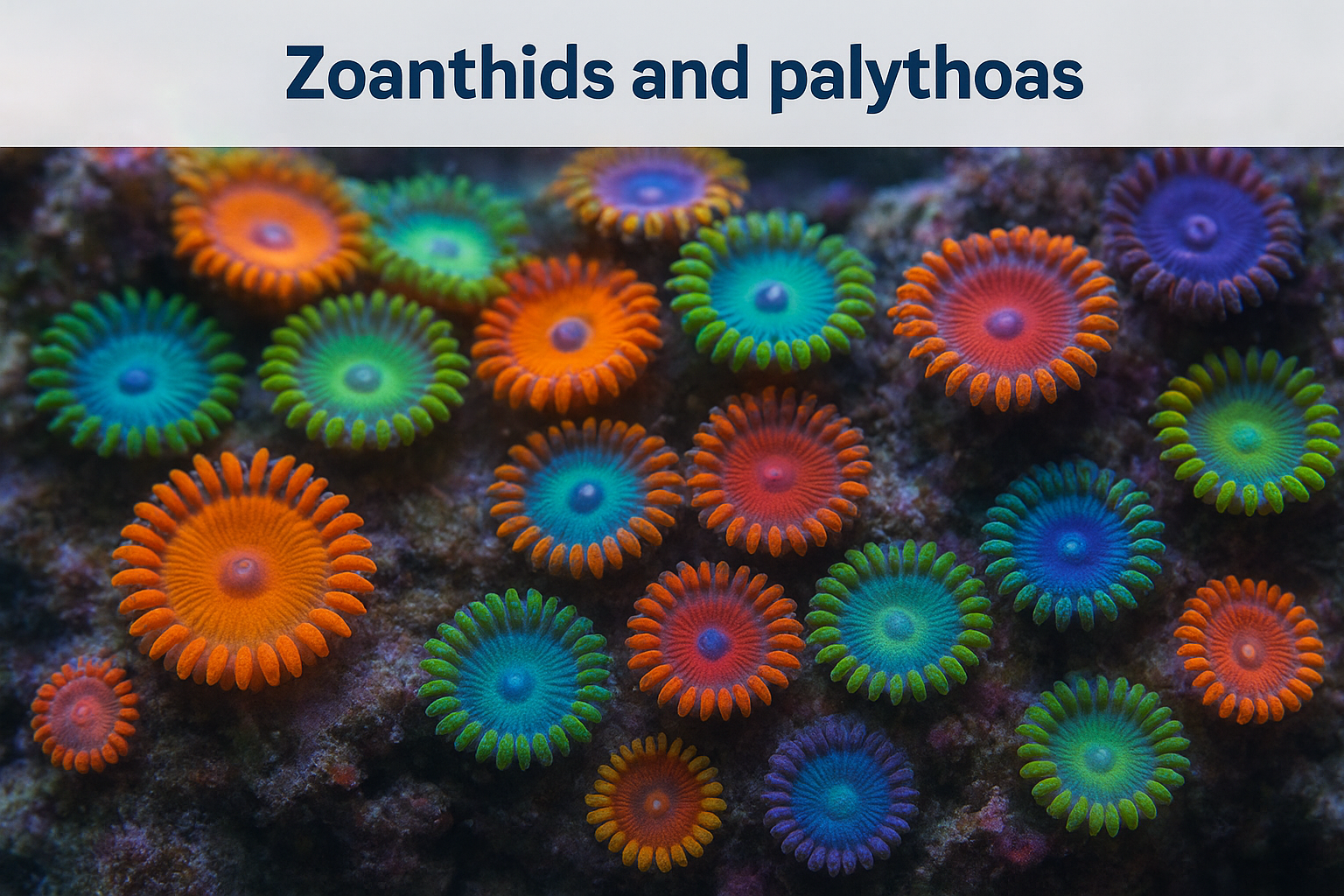
These corals grow as individual polyps connected by a mat that spreads across rock surfaces. Each polyp features a circular disc surrounded by tentacles that comes in virtually any color combination imaginable. Beginners appreciate how zoas tolerate beginner mistakes and grow fast enough to fill empty rock within months. The corals also frag easily by simply cutting sections of connected polyps, making them perfect for trading or selling.
Zoanthids thrive under moderate lighting between 75 and 150 PAR but adapt to higher or lower intensity without dying. Water flow should create moderate movement that keeps debris from settling between polyps while avoiding strong current that forces closure. These corals tolerate temperature ranges from 74 to 82 degrees and handle alkalinity fluctuations better than stony species. Maintain salinity at 1.025 specific gravity for consistent polyp extension.
Zoas signal perfect conditions by staying fully open with vibrant colors rather than dull brown tinting that indicates stress.
Position these corals on flat rock surfaces in the lower to middle tank sections where they receive adequate light without burning. Space colonies two inches apart to accommodate lateral spreading without smothering neighbors. Zoas and palys coexist peacefully with each other but will overtake slower corals through contact. Watch for rare instances of chemical warfare between certain color morphs that causes tissue recession.
Select frags with fully open polyps showing bright, saturated colors without brown edges or closed centers. Healthy colonies display at least five polyps per frag to ensure quick establishment. Always handle palythoas with gloves because some species contain dangerous palytoxin that causes serious injury through skin contact or inhalation. Verify that sellers provide genus identification to avoid mixing incompatible varieties.
Toadstool leather coral delivers impressive size and movement to reef tanks while requiring minimal maintenance. This mushroom-shaped soft coral sways dramatically with water flow and grows large enough to become a centerpiece specimen in your display. You will find it sold as Sarcophyton or leather mushroom in most aquarium shops.
This coral grows a thick central stalk topped with a disc-shaped cap covered in tiny polyps that extend like a fuzzy carpet. The structure resembles an underwater toadstool that waves gracefully with current. Beginners appreciate how toadstools tolerate fluctuating water conditions and recover quickly from stress by temporarily shedding their outer membrane. These corals also grow fast and reach hand-sized proportions within a year of purchase.
Toadstool leather thrives under moderate to high lighting between 100 and 200 PAR at placement level. Water flow should provide moderate to strong movement that keeps the cap swaying and helps shed debris. These corals require regular shedding cycles to stay healthy, and proper flow assists this natural process. Maintain temperature between 76 and 82 degrees Fahrenheit with salinity at 1.025 specific gravity for consistent polyp extension.
Toadstools signal stress by closing their polyps and producing a waxy membrane that peels away naturally within a few days.
Position toadstools in the middle section of your tank where they receive adequate light without blocking flow to other corals. Space these corals at least six inches from neighbors because the cap expands significantly as it grows. Toadstool leather remains peaceful but releases chemical compounds when stressed that may irritate nearby corals. Running activated carbon helps remove these compounds and prevents compatibility issues.
Select specimens with fully extended polyps covering the cap without bare patches or tissue damage. Healthy toadstools display firm, upright stalks rather than limp or drooping posture. Avoid pieces currently shedding their membrane as this makes acclimation more difficult. Purchase smaller colonies because toadstools grow rapidly and will dominate tank space within months.
Clove polyps create flowing movement through clusters of daisy-shaped polyps that extend on long stalks. These soft corals grow in dense groups that wave gracefully with water flow, adding both color and motion to your reef. You will find them labeled as clove polyps, glove polyps, or Clavularia in aquarium shops.
This coral develops individual polyps on elongated stalks connected by a mat that spreads across rock surfaces. Each polyp features eight feathery tentacles arranged in a flower-like pattern that pulses with the current. Beginners appreciate how clove polyps tolerate various tank conditions and grow steadily without becoming invasive like green star polyps. The coral also responds quickly to feeding, making it satisfying to maintain.
Clove polyps thrive under low to moderate lighting between 50 and 125 PAR at placement level. Water flow should provide moderate to high movement that keeps the polyps swaying and brings food particles within reach. Maintain temperature between 76 and 82 degrees Fahrenheit with salinity at 1.025 specific gravity. These corals benefit from occasional spot feeding with phytoplankton or coral foods to accelerate growth.
Position clove polyps on flat rock surfaces in the lower to middle tank sections where they receive adequate light and flow. Space colonies three inches from other corals to prevent overgrowth as the mat expands laterally. Clove polyps remain peaceful but prove sensitive to stings from aggressive neighbors and chemical warfare from nearby species.
Clove polyps signal stress by staying retracted, but they recover within days once irritants are removed or conditions improve.
Select frags with fully extended polyps showing vibrant color without brown tinting or wilted stalks. Healthy clove polyps display consistent polyp density across the mat without bare patches. Avoid pieces that stay closed during inspection or show tissue recession at the base. Purchase established colonies rather than tiny frags because clove polyps grow slower than other best beginner soft corals.
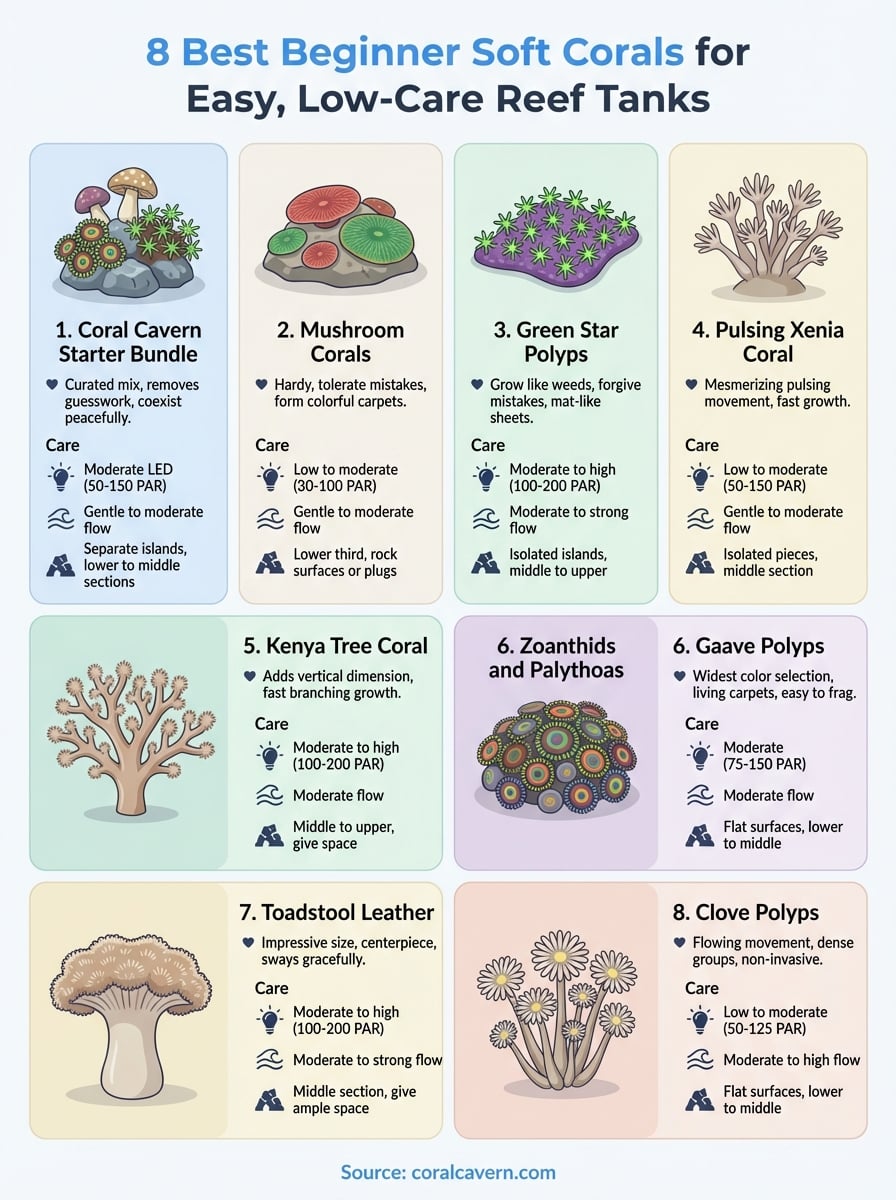
These eight best beginner soft corals give you a proven path to reef keeping success without expensive failures. Each species tolerates common mistakes while showing fast growth and vivid colors that keep you motivated. You now know exactly what lighting, flow, and placement each coral needs to thrive in your specific tank setup.
Start with two or three species that share similar care requirements rather than mixing different difficulty levels. This approach simplifies tank management and reduces compatibility concerns while you learn proper feeding schedules and water testing routines. Add more corals gradually as you master water parameters and observe how your existing specimens respond to daily conditions.
Your journey from empty tank to thriving reef begins with the right coral selection. Coral Cavern offers curated selections of these hardy soft corals with expert guidance tailored to your specific setup needs. Browse our inventory to find healthy specimens that arrive properly packaged and ready to attach and grow in your new aquarium.